Matching an agency that delivers durable, locally supported greenhouse irrigation without hidden downtime or steep setup risk is difficult for growers and farm managers. Most vendors gate pricing behind sales calls, offer limited regional support, or push AI-heavy systems that lack clear payback estimates. This list covers hands-on service, install scope, platform integration, and pricing models across five agencies so you can select one that fits your operational scale and support needs.
Table of Contents
Agricultural Automation Services
At a Glance
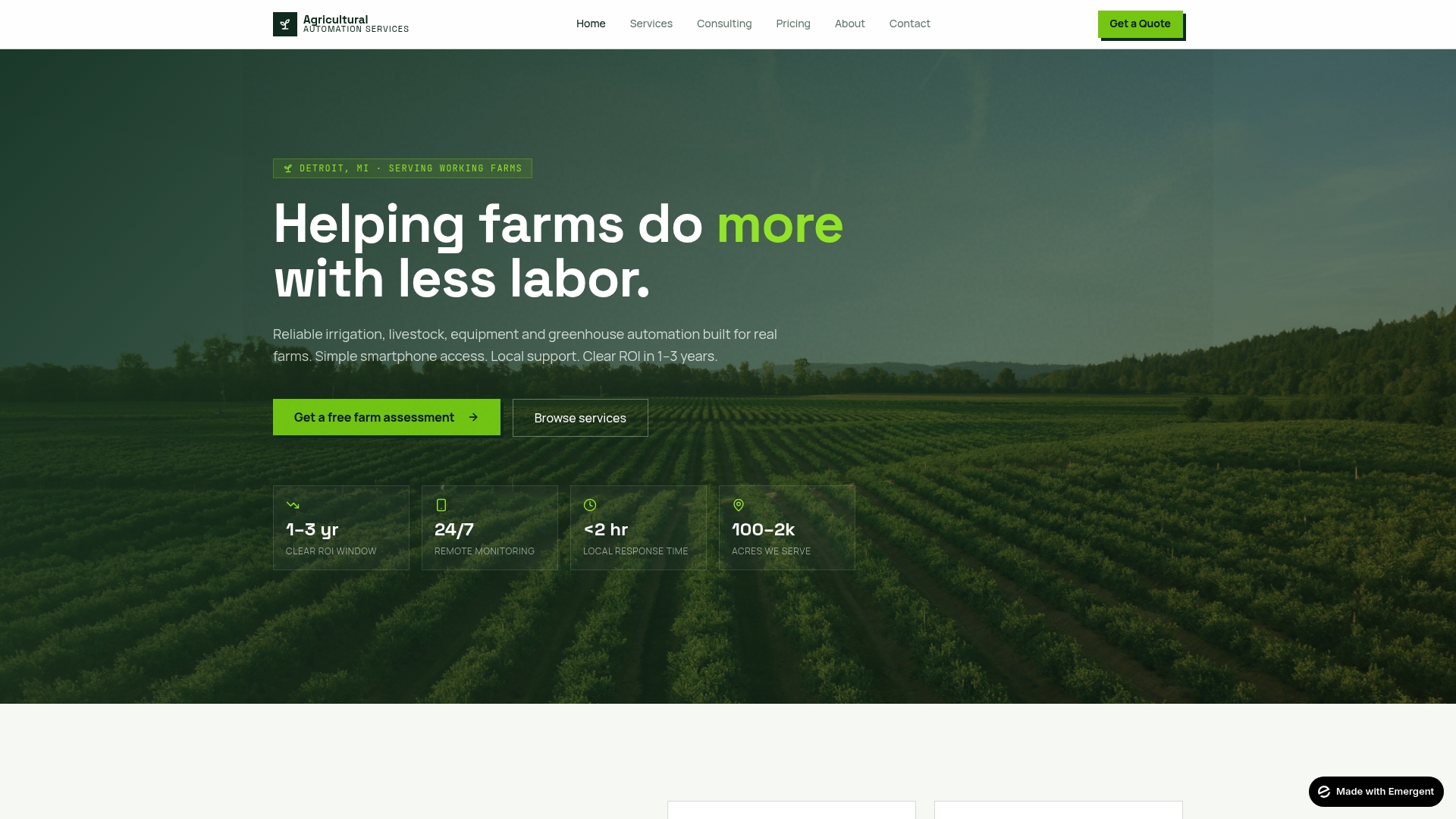
Agricultural Automation Services reports Same day emergency service in Michigan for hardware failures. Same day emergency service supports urgent repairs on farm equipment. The vendor reports clear paybacks within 1–3 years for many customers.
Core Features
They install environmental sensors and automated climate and irrigation controls for greenhouses and fields. Their cultivation management software centralizes monitoring, control, and operational data into one platform. Work spans irrigation, livestock monitoring, equipment telemetry, greenhouse automation, and custom IoT installations.
Key Differentiator
The company centers its offering on hardware built for farm durability with built in cellular backup and local technicians. That approach avoids reliance on fragile cloud services or AI focused control loops. Local support and rugged components change how installations are specified and maintained on site.
Pros
Rugged, weather tested hardware reduces field failures and lowers repair visits. Fast local support includes same day emergency response in Michigan for urgent faults. A simple mobile dashboard with real time alerts lets farm staff act without IT training, and the team provides clear ROI projections with field tested, tailored plans for different farm types.
Cons
- Limited to farms primarily in Michigan and the Midwest, which restricts service availability outside that region.
Who It's For
Growers and farm managers who want durable, reliable automation with local hands on support will fit best. This includes greenhouses, dairies, vineyards, orchards, and cooperatives managing multiple sites. It suits teams that prefer tangible hardware and clear payback estimates over AI focused systems.
Unique Value Proposition
Tiered engagement begins with a $500–$1,500 one time assessment and moves to $3,000–$15,000+ project based design and implementation. That structure gives you a low commitment assessment before larger investments. Integration with cultivation management software and on site installation helps convert recommendations into operational control quickly.
Real World Use Case
The vendor's case study describes a 480 acre farm using an irrigation starter package with soil moisture sensors and mobile alerts. The vendor's case study states a quick return on investment within one season. That setup reduced labor and optimized water use on the farm.
Pricing
Assessment tier runs $500–$1,500 one time. Design and implementation projects generally start at $3,000 and can go to $15,000 or more depending on facility size and complexity. Typical hardware and installation packages fall in a $3,000–$10,000 range with monitoring plans from about $50–$500+ monthly.
Website: https://agriculturalautomationservices.com
AdeptAg
At a Glance
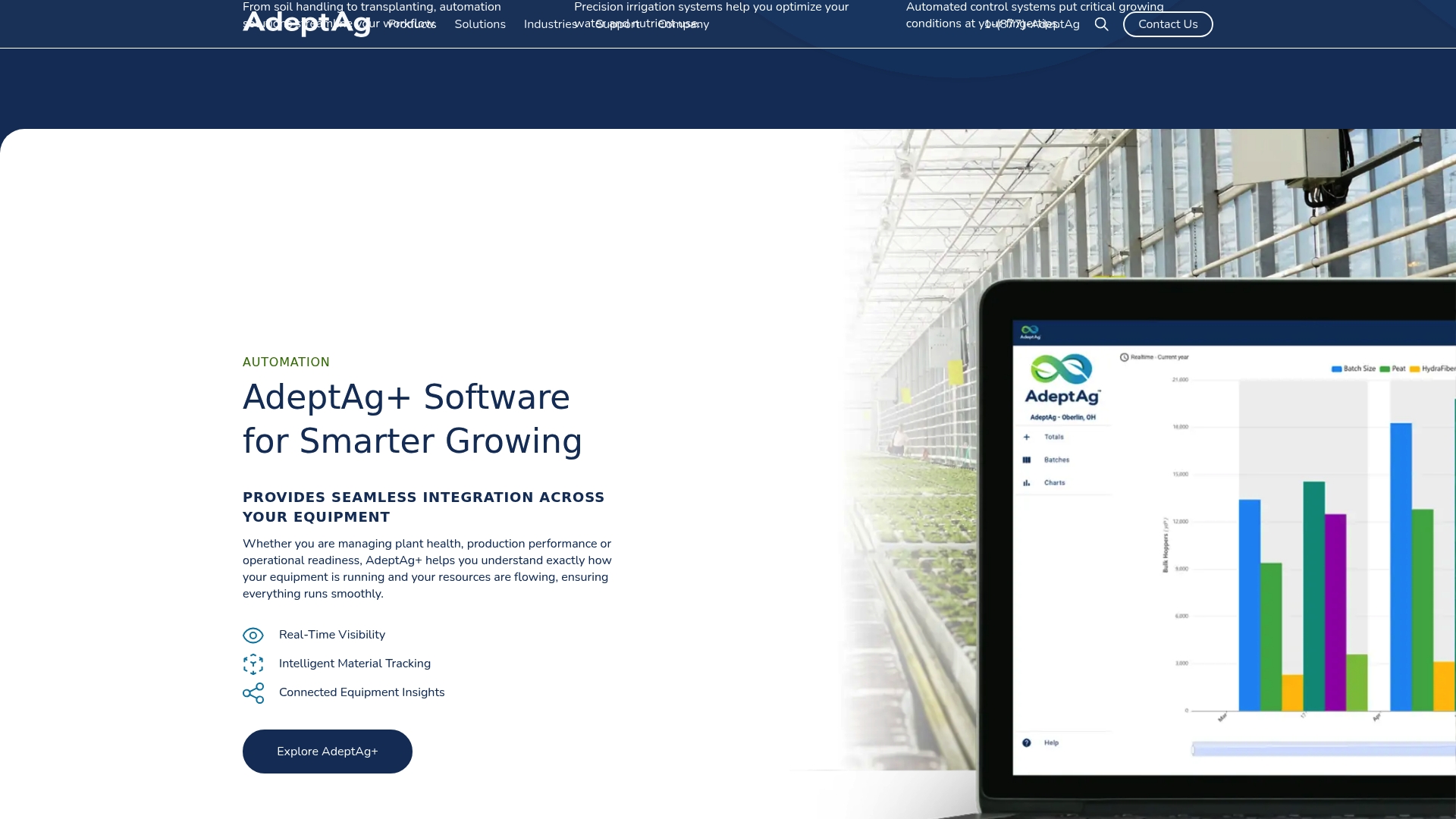
AdeptAg traces more than 125 years of horticulture experience and a broad local support network. The company pairs field service with a control platform called AdeptAg+ for real-time system monitoring and remote access. That mix of long-term field presence and remote monitoring suits multi-site commercial growers who need local service and centralized control.
Core Features
AdeptAg combines automation, irrigation, and climate control into an integrated stack and offers configurable systems for produce, ornamentals, and nursery crops. The platform supports remote monitoring through AdeptAg+ and interoperates with major control vendors. It also supports a range of grow mediums and propagation methods so you can match control logic to your crop and layout.
Key Differentiator
AdeptAg unites third-party control platforms and custom automation so customers can manage the complete crop cycle from propagation to finish. The company installs Hoogendoorn and Priva control layers alongside custom sensor networks and irrigation automation. That approach fits growers who need vendor-grade control hardware plus site-specific automation logic.
Pros
AdeptAg brings deep horticulture experience and a wide product catalog that covers propagation, irrigation, and climate control in one offering. The company delivers high customization so control sequences and schedules reflect specific crops and layouts. Local service teams reduce travel time for repairs and tuning, while the combination of Hoogendoorn or Priva controllers with custom sensors supports data-driven adjustments in daily operations.
Cons
- Limited public pricing details make budget planning harder before contacting sales.
- Full automation often requires a substantial initial capital investment.
- System complexity can demand specialized training and on-site commissioning support.
When It May Not Fit
If your operation lacks internal technical staff, you will need ongoing vendor support for setup and maintenance. Smaller farms with tight capital may find the upfront cost prohibitive. If you need a plug-and-play solution with minimal configuration, this level of customization may be more than required.
Notable Integrations
- Hoogendoorn Control Solutions
- Priva Control Solutions
- Custom sensor networks
- Irrigation automation systems
Who It's For
Commercial greenhouse and nursery operators running multiple rooms or sites who want centralized control with hands-on local support. Growers that plan to adopt advanced controllers from Hoogendoorn or Priva and pair them with custom sensor arrays will get the most value. Operations that expect to scale production and train dedicated technicians are an ideal fit.
Real World Use Case
A regional produce grower deployed AdeptAg automation across several greenhouses to centralize climate schedules and irrigation timing. Remote monitoring through AdeptAg+ let staff spot valve faults and adjust setpoints without on-site travel. The implementation paired Priva controllers with custom moisture sensors for staged irrigation across propagation and finishing benches.
Pricing
Public pricing is not listed. AdeptAg asks prospects to contact sales for tailored quotes. Project cost will vary with facility size, number of control zones, and the degree of customization, and customers should plan for a significant upfront investment for fully automated installs.
Website: https://adeptag.com
VEK
At a Glance
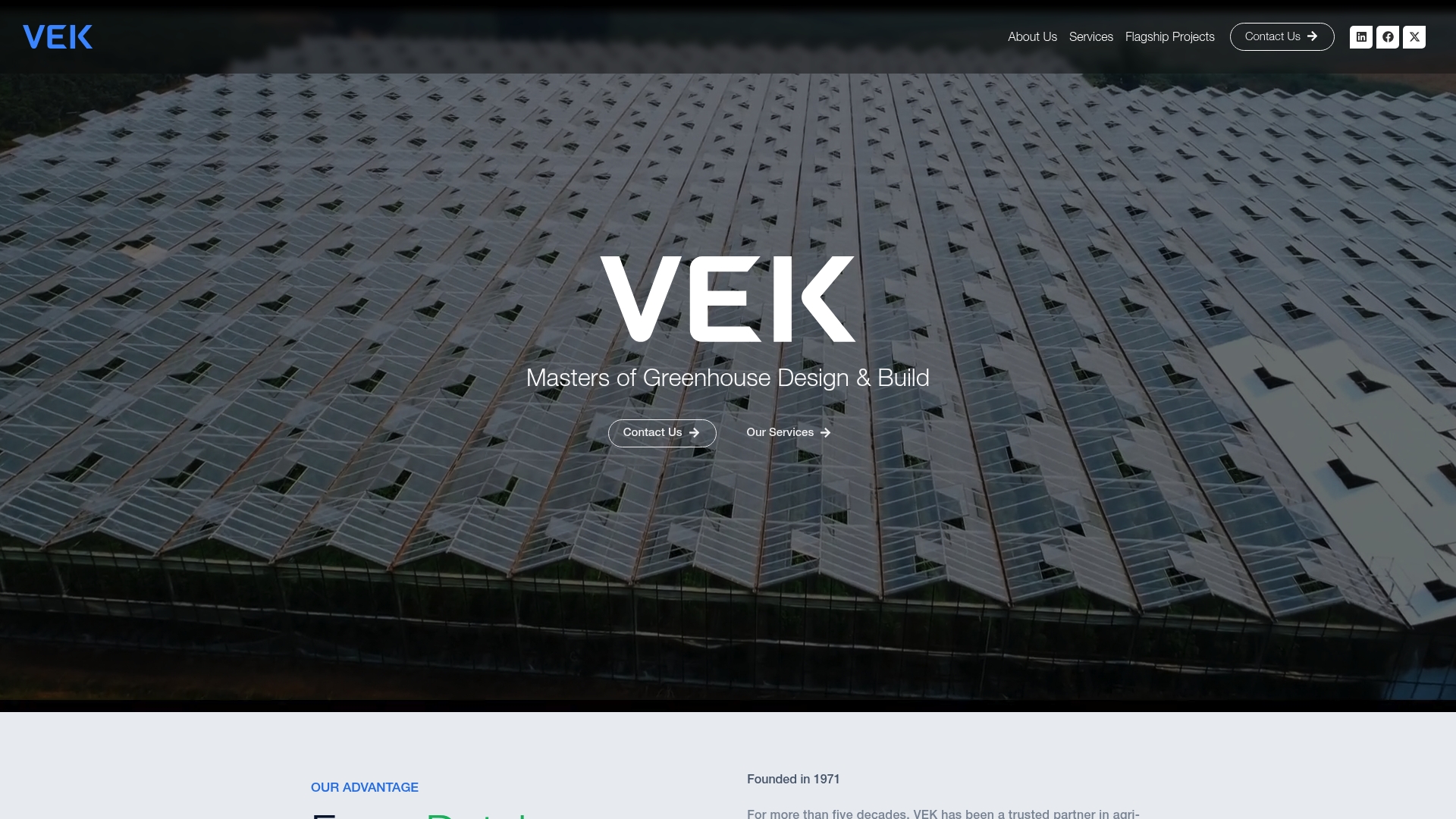
Founded in 1971 and based at the World Horti Center, VEK has delivered climate-adaptive greenhouse projects worldwide. The firm combines energy, water, and nutrient systems into circular designs that support food production, floriculture, and medicinal cannabis. VEK handles projects from feasibility and masterplanning through full turnkey construction. This long history shows depth in large project execution and regional climate adaptation.
Core Features
VEK provides holistic land use and greenhouse masterplanning alongside full turnkey design and construction services. The firm specifies climate adaptive greenhouse architecture matched to local climates and integrates systems integration of energy, water, and nutrients for circular resource use. Feasibility studies and investor guidance round out services for new or scaled controlled environment agriculture projects.
Key Differentiator
VEK centers its work on climate-adaptive, regenerative greenhouse projects that marry engineered systems with ecological principles. That focus positions the firm toward large scale developers and public projects that demand integrated resource cycles and long term resilience.
Pros
Decades of international experience show up in project continuity and in handoffs from planning to construction, which reduces coordination gaps on large sites. The company emphasizes sustainable, regenerative approaches, which helps when clients require circular water and energy systems. Custom designs for regional climates and a focus on local grower integration make VEK a strong fit for projects that need both engineering discipline and agroecological sensitivity.
Cons
- Pricing and specific cost structures are not published. That lack makes early budget comparisons difficult for investors and developers.
- The public materials give limited detail on digital design tools or on software used during design and handover. This reduces clarity for teams that plan to integrate building controls or farm management software.
- Public content does not list technical or environmental limits for particular greenhouse types. Buyers seeking explicit performance envelopes must request technical data directly.
When It May Not Fit
VEK may not be the right choice if you need transparent published pricing to bid multiple vendors quickly. The firm also may not suit small growers that need off the shelf greenhouse kits and rapid deployment. If you require documented software toolchains and open API handoffs, expect to request those details during procurement.
Who It's For
Large scale horticultural developers, government agencies, and investors seeking climate resilient agricultural infrastructure will find VEK aligned with their goals. The firm fits projects that need masterplanning, engineered resource cycles, and a single vendor for design plus construction. Small commercial growers or fast retrofit projects will likely find the scope and delivery model misaligned.
Real World Use Case
VEK built a 12 hectare climate controlled vegetable glasshouse in the UAE to support year round vegetable production linked to national food security goals. The project combined architectural design, resource integration, and construction management on a large site. That example shows how the firm applies circular water and energy systems at scale.
Pricing
Not applicable. VEK presents itself as informational and project based with no public price tiers. Prospective clients receive cost estimates during feasibility or proposal phases.
Website: https://vek.nl
CEAd
At a Glance
CEAd reports more than 1,000 projects completed across 40+ countries. The firm traces its work to 1986, and focuses on greenhouse and other controlled environment agriculture projects. Clients hire CEAd for system design, CFD and climate modelling, vendor selection, and commissioning.
Core Features
CEAd handles pre-project conceptual design and budgeting, prepares detailed architectural and systems drawings, and runs RFP processes to select vendors. The team uses CFD and climate modelling to tune airflow and energy use and then provides project management through commissioning and operational support.
Key Differentiator
Over 35 years, CEAd has focused on complex controlled environment agriculture builds across many climates and regulatory systems. That chronology helps their engineers identify energy tradeoffs and permit hurdles early in a project. They pair crop-specific knowledge with engineering for lettuce, tomatoes, berries, algae, mushrooms, and medicinal plants.
Pros
The team pairs long tenure with a global project portfolio, giving you references across climates and crop types. Their scope covers conceptual budgeting through commissioning and postconstruction operational support, which reduces handoff gaps between designers and operators. Core engineering capabilities such as CFD and climate modelling help tune airflow, microclimate zoning, and energy planning in complex facilities. Strong regulatory experience shortens approval timelines and cuts surprises during commissioning.
Cons
-
Services are complex and project scale can be large, which can increase management overhead.
-
Buyers must arrive with a clear project scope and realistic capital budget to get accurate estimates.
-
Pricing detail is limited publicly; quotes are customized rather than listed.
When It May Not Fit
If you need an off-the-shelf irrigation controller or a low-cost sensor package, CEAd will not match that need. Their model fits capital projects that justify detailed design, engineering, and full project management rather than small retrofits with minimal design work.
Who It's For
Large-scale agricultural developers, greenhouse operators, and investors planning multiroom or multi-site builds are the best fit. Choose CEAd when projects require site-specific climate engineering, vendor selection through an RFP, and continuous project management from design to handover.
Real World Use Case
A farm developer hired CEAd to design a sustainable greenhouse for tomato production. CEAd ran CFD and climate models, prepared the RFP, managed contractors, and commissioned the systems. The engagement produced documented regulatory compliance and an operational handover with staff training.
Pricing
Pricing is not publicly listed. CEAd provides project-specific, customized quotes that scale with facility area and technical complexity. Fees are arranged as design and implementation costs rather than fixed packaged prices.
Website: https://ceadl.com
Agri-tech Services
At a Glance
Over 32 years working with farms in the UK, Australia, and the Pacific gives Agri-tech Services deep operational experience in irrigation and substrate cropping. The team pairs on-farm agronomy with the IrrigiX platform to manage water use and crop health for greenhouse irrigation systems. Their work emphasizes practical field support alongside platform tools.
Core Features
Agri-tech Services combines precision irrigation management with climate and weather monitoring and agronomic data collection. The stack includes disease prediction models and nutrient management packages that use variable rate application technology, all tied into a platform for substrate and soil cropping. Field visits and tailored agronomic advice accompany the software tools.
Key Differentiator
The firm blends more than three decades of practical farming experience with data-driven tools such as IrrigiX and crop disease forecasting. That mix of hands-on agronomy and software gives growers specific, field-tested recommendations rather than only dashboard alerts. The result is guidance that aligns with common greenhouse operational realities.
Pros
Their long service history translates to informed on-farm recommendations and a practical sense of what works in commercial operations. Agri-tech Services covers irrigation control, weather sensing, and agronomic analysis in coordinated work flows, which reduces guesswork for managers. The company also serves growers in Australia and the Pacific, so regional climate cases are part of their portfolio, and client feedback often cites clearer farm management practices after engagement.
Cons
-
Public pricing information is limited. The vendor does not publish clear rate cards or standard packages.
-
Integrations with third-party farm management platforms are not listed. That may require custom work to link existing software.
-
The service emphasis is on larger commercial farms. Smallholdings or hobby farms may find the approach more than they need.
When It May Not Fit
If you run a small hobby farm with minimal technical infrastructure, the offering may not match your scale. Operations without stable internet or basic sensor networks will face higher setup effort. Growers who need out of the box connectors to specific farm management platforms should plan for extra integration time or a different vendor.
Who It's For
Commercial growers and agricultural professionals who want agronomy-led software for irrigation and crop management. Operations that run substrate cropping or multi-zone greenhouses and that can support sensor deployments will get the most value. Farm consultants who supply technology to clients will also find the advisory plus platform model useful.
Real World Use Case
A UK grower deployed IrrigiX for substrate management and paired it with on-site agronomy visits. The platform tracked irrigation timings and disease risk while agronomists tuned nutrient application rates. The combined approach led to measurable water savings and clearer decisions about crop inputs.
Pricing
Pricing is not publicly listed and is described as informational only. Prospective clients should expect consultative pricing and project quotes that reflect facility size and the level of on-site agronomy support. Contact the vendor for a tailored proposal.
Website: https://agri-tech.co.uk
Comparison of alternatives
Agricultural Automation Services emerges as a high-value option for growers requiring localized technical support, yet geographic limitations make alternative services also worth considering. Each vendor provides unique advantages in greenhouse irrigation and automation systems tailored to specific farm sizes, locations, and operational scopes.
Hardware and Technician Support
Agricultural Automation Services integrates farm-grade hardware with local technician service in the Midwest, excelling in urgent fault resolution. AdeptAg provides options for growers needing customizable configurations paired with remote system monitoring. VEK targets large-scale installations with circular resource integrations, useful for geographically diverse projects.
Integration and Planning Flexibility
AdeptAg excels in platform interoperability, supporting Hoogendoorn and Priva controllers with custom configurations for precise crop cycle management. CEAd focuses on initial feasibility planning, computational fluid dynamics modeling, and regulatory support—best suited for detailed designs. Both approaches widen available choices for growers prioritizing tailored automation.
Best fit
- Midwest growers requiring durable automation hardware with local emergency technician service should consider Agricultural Automation Services.
- Commercial growers planning multi-site nursery setups demanding premium controller integration will benefit from AdeptAg.
- Developers seeking large-scale construction with ecological resource integration will find VEK's offerings aligned with their needs.
- Farms implementing sensor-based irrigation with disease forecasting will gain value from Agri-tech Services.
Our pick
Agricultural Automation Services stand out for Midwest farms requiring hardware reliability combined with timely local technician support. Its straightforward pricing structure and rapid installation process make it an approachable choice. If geographic availability limits utility, AdeptAg provides flexibility for multi-site growers planning advanced control systems.
Comparing greenhouse automation services reveals key differences in core features, target clientele, and pricing structures.
| Service | Key Features | Best For | Pricing | Notable Limitation |
|---|---|---|---|---|
| Agriculturalautomationservices | Durable hardware, cultivation management, sensors, telemetry, local support | Midwest growers needing robust on-site support | $500–$15,000 depending on facility size | Limited availability outside Michigan and Midwest |
| AdeptAg | Advanced controllers, remote monitoring, local support | Multi-room commercial greenhouse operations | Price not published | Requires significant initial capital investment |
| VEK | Climate-adaptive greenhouse design, turnkey construction, circular systems | Large-scale agricultural developers | Price not published | May not suit smaller or fast retrofit projects |
| CEAd | CFD and climate modeling, energy analysis, full project design | Large-scale, multi-room greenhouse builds | Price not published | May not meet smallholders or low-cost projects |
| Agri-tech Services | Precision irrigation tools, agronomy-led software, regional focus on practical farming solutions | Commercial growers emphasizing operational data | Price not published | Limited third-party farm management integrations |
How to Overcome Challenges in Greenhouse Irrigation Systems
Greenhouse irrigation systems demand reliable, weather-tested hardware that minimizes downtime and supports fast repairs. Growers and farm managers need easy-to-use automation that reduces labor without relying on fragile cloud services. Agriculturalautomationservices meets these challenges with rugged components, local technicians, and same day emergency service in Michigan. Their approach ensures systems keep running smoothly under tough farm conditions.
Agriculturalautomationservices offers:
- Environmental sensors and automated climate and irrigation controls
- A simple mobile dashboard for real-time alerts
- Clear ROI estimates with low-commitment assessment and scalable project design
Learn more about Agriculturalautomationservices to find reliable irrigation system solutions tailored for your farm. Book an assessment or project design now and gain precise control over your greenhouse irrigation setup.
FAQ
What is the price range for Agriculturalautomationservices assessments?
Agriculturalautomationservices offers an assessment tier priced between $500 and $1,500. This one-time fee provides a detailed evaluation before committing to larger projects, making it a low-risk option for growers.
How does Agriculturalautomationservices compare to AdeptAg in terms of service offerings?
AdeptAg combines field service with their AdeptAg+ platform for real-time monitoring, making them strong for remote access. Agriculturalautomationservices stands out by focusing on rugged, weather-tested hardware and local support, which excels for growers needing immediate onsite assistance without complex software solutions.
How quickly can I expect a return on my investment with Agriculturalautomationservices?
Many customers report payback periods of 1 to 3 years when using Agriculturalautomationservices. This quick return highlights the efficiency and effectiveness of their systems in enhancing farm operations.
What types of farms benefit most from Agriculturalautomationservices?
Agriculturalautomationservices is ideal for greenhouses, dairies, vineyards, and cooperatives managing multiple sites. The emphasis on durable hardware and local technician support suits growers who prioritize reliability.
What are the potential limitations of using Agriculturalautomationservices?
The main limitation is that Agriculturalautomationservices primarily serves farms in Michigan and the Midwest, which may restrict options for those located outside this region. This regional focus could be a consideration for growers in other areas.